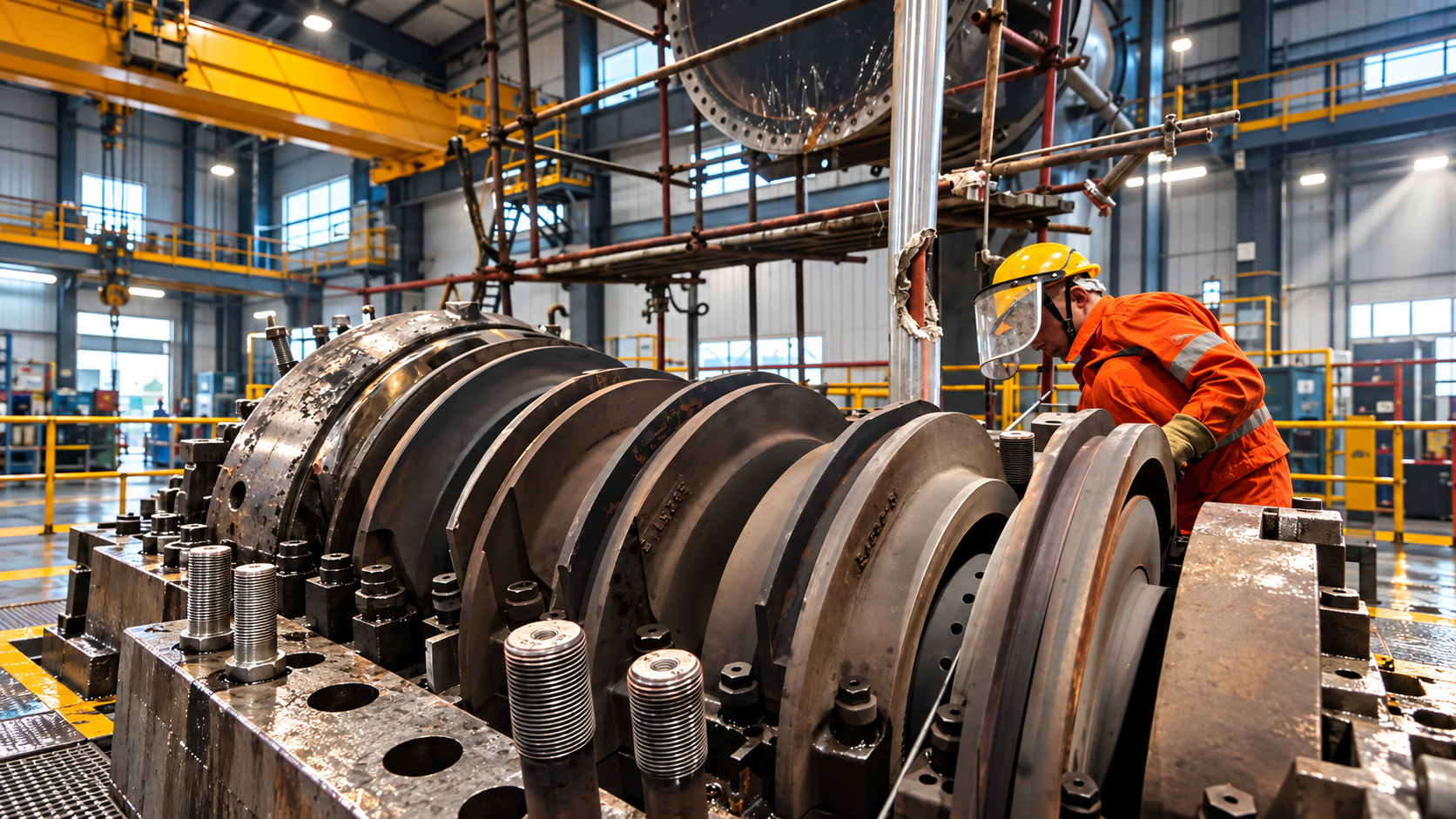
Field Execution Procedure
Precision Overhaul.
Proven Performance.
From shutdown to successful grid synchronization.
Site Preparation
Prepare the site, tools and lifting plan for controlled field execution.
- Work area and housekeeping
- Tools and lifting readiness
- Owner scope coordination
- Site housekeeping and work-zone demarcation
- Tools, lifting equipment, and instrumentation mobilization
- Outage scope review and resource allocation with owner
- Lifting plan coordination and transport route verification
- Work-area isolation and safety barrier installation
- Temporary lighting, ventilation, and power supply setup
- Spare parts inventory check against planned scope
- Day/night shift continuity planning and personnel briefing
- Dust and moisture protection measures for exposed components
Dismantling
Disassemble the turbine-generator set with recorded measurements and component protection.
- Controlled casing and rotor lifting
- Coupling and actuator removal
- Generator withdrawal and protection
- Exhaust pipe fastener removal and pipe extraction; inspection of failed spiral-wound gaskets at vertical/horizontal exhaust joints for renewal
- Steam-pipe insulation removal, cutting and extraction of both side steam admission pipes
- Casing bolt/nut removal with damage inspection; hydraulic actuator disconnection with open-pipe dust protection
- Upper casing sling, four-corner leveling, split-line jacking and free-separation verification
- Upper casing lift and safe ground placement; upper diaphragm carrier removal
- Turbine rear bearing upper half opening; white-metal visual inspection
- Turbine-gearbox and gearbox-generator coupling dismantling with bolt/nut inspection
- Steam-path clearance and rotor level recording before rotor lift
- Turbine rotor lift; lower diaphragm radial steam seal tooth inspection
- Generator small end cover and front/rear bearing cover removal
- Generator rotor withdrawal with rotor and stator moisture/dust protection
- Lower steam seal carrier lift; right stop-valve actuator cylinder partial dismantling
- Exhaust casing bolt sequence documentation
- Spiral-wound gasket failure noted at vertical and horizontal exhaust joints for renewal
- Steam pipe cut-edge marking for subsequent weld bevel preparation
- Casing split-line witness mark placement before separation
- Hydraulic actuator disconnection; open pipe connections protected against dust
- Casing and coupling bolts and nuts inspected; undamaged
- Before upper-casing lifting, slings were fitted, all four corners leveled, and the split line jacked open approximately 2 cm; free separation was confirmed
- Upper casing, upper diaphragm carrier and lower seal carrier lifted without binding
- Upper casing placed safely at ground level with cover protection
- Turbine rear bearing upper half opened; white-metal visual inspection performed
- Rotor blade leading/trailing edge visual survey for erosion and deposits
- Journal surface scratch documentation
- Coupling bolt inspection
- Steam-path clearance measurement at designated points
- Rotor axial and radial position recording before extraction
- Lower diaphragm steam seal tooth condition survey
- Generator small end covers and front/rear bearing covers removed
- Generator rotor withdrawn; rotor and stator protected against moisture and dust
- Steam seal carrier segment tagging and orientation marking
- Right stop-valve actuator cylinder partial dismantling
Inspection & Engineering Assessment
Assess condition, measure critical clearances and review findings with the owner.
- Blade, journal and bearing checks
- Clearance and split-line measurements
- Corrective scope and spares review
- Blade erosion, crack and deposit survey across all stages
- Journal scratch assessment and bearing white-metal bonding/cracking inspection
- Bearing support pad contact pattern evaluation
- Diaphragm and rotor soft-scale assessment at intermediate stages
- Radial steam seal clearance measurement at four quadrants (lead-wire at 90/270, feeler gauge at 0/180)
- Rotor level and steam-path measurement record compilation
- Casing split-line trial assembly with gap checks in free and partially bolted conditions
- Gearbox gear mesh and contact pattern inspection
- Generator winding and wedge looseness assessment
- Strainer, circulating-water filter, actuator piston/slide/sleeve and oil passage inspection
- No blade erosion or cracks and no journal scratches were found in the initial visual inspection
- Moving and stationary blades cleaned and inspected; no cracks or erosion found after descaling
- Journal surface scratch documentation
- Bearing clearance measurement and contact pattern evaluation
- Rear bearing upper half white-metal inspection: no debonding or cracking found
- Debonding and cracking of the lower bearing lining were recorded for assessment
- Soft deposits were found on two intermediate-pressure moving and stationary blade stages
- Rotor level measurements recorded before dismantling and rechecked during reassembly
- Radial steam seal clearance measurement at four quadrants: lead-wire method at 90/270 degrees, feeler gauge at 0/180 degrees
- Last two stages seal teeth found missing; no replacement spares were available on site, so the missing teeth could not be repaired during this outage
- Slight steam seal clearance deviations recorded for owner review
- Casing split-line trial assembly with gap checks in free condition and with approximately one-third of bolts tightened; results acceptable
- Gearbox gear mesh and contact pattern inspection
- Generator winding insulation resistance test and DC test; results acceptable
- Wedge tightness assessment; no looseness found in stator winding slots
- Strainer mesh condition inspection; strainer found intact
- Circulating-water strainer inspection: no damage or blockage found
- Actuator pilot valve slide and sleeve wear assessment
- Oil passage flow verification
- Findings review meeting with owner to agree corrective scope
- Open-item management log established for tracking
Cleaning & Restoration
Clean steam-path components and restore actuator mechanisms for reliable reassembly.
- Blade, casing and seal cleaning
- Actuator and oil-passage restoration
- Bearing support contact work
- Rotor moving blade and diaphragm stationary blade cleaning and grinding
- Casing split-line surface cleaning before and after reassembly
- Diaphragm carrier and casing internal surface cleaning, polishing and compressed-air blowing
- Seal carrier and oil deflector cleaning
- Steam-pipe cut-edge weld bevel grinding
- High-pressure hydraulic actuator teardown, pilot valve slide/sleeve cleaning (no obvious wear), small contaminants removed with tacky cleaning material, kerosene cleaning, compressed-air blowing and reassembly
- First/second extraction actuator teardown with pilot spool fine metallographic abrasive paper polishing followed by diesel cleaning
- Removal of two pieces of blue sealant obstructing second-extraction sleeve oil passage
- Right main steam valve actuator cylinder teardown, cleaning and piston inspection (no wear or debris found)
- Left stop-valve actuator seal replacement and reassembly
- Right stop-valve actuator cylinder reconnection to valve
- Intermediate actuator pilot-valve bearing replacement
- Reinstallation of all high/intermediate/low-pressure actuators
- Moving and stationary blade descaling; no cracks or erosion found after cleaning
- Casing internal surface cleaning
- Split-line surface cleaning
- Diaphragm carrier groove cleaning
- Oil deflector cleaning
- Steam-pipe cut-edge weld bevel grinding
- High-pressure hydraulic actuator teardown; pilot valve slide and sleeve showed no obvious wear; small contaminants removed from the actuator chamber using a tacky cleaning material; kerosene washed, compressed-air blown dry, and reassembled
- First and second extraction actuator teardown; pilot spool polished with fine metallographic abrasive paper followed by diesel cleaning
- Two pieces of blue sealant identified and removed from second-extraction sleeve oil passage; passage cleared
- Right main steam valve actuator cylinder teardown and cleaning; piston inspected with no wear or debris found
- Left stop-valve actuator seal replacement and reassembly
- Right stop-valve actuator cylinder reconnected to valve body
- Intermediate actuator pilot-valve bearing replacement
- All high/intermediate/low-pressure actuators reinstalled
Auxiliaries
Restore oil, cooling-water and gearbox systems through cleaning, inspection and acceptance.
- Oil tank and filter service
- Condenser and oil-cooler cleaning
- Gearbox inspection and restoration
- Main oil tank strainer removal, residual oil drain, internal cleaning and owner acceptance
- Strainer clean/reinstall, tank gasket renewal and cover restoration
- Lube-oil filter cleaning and element replacement
- EH duplex filter cleaning, element replacement and selector-valve seal renewal
- Circulating-water filter inspection for damage and blockage
- Condenser tube cleaning and unblocking; manhole gasket replacement and cover restoration
- Condenser end cover cleaning and refitting
- Condenser water-fill leak check
- Oil cooler water-side end cover dismantling, bundle cleaning/unblocking/flushing, owner inspection and acceptance
- Cooler cover cleaning, gasket renewal and refitting
- Cooler and condenser water-flange blanking plate removal with gasket renewal
- Drain flash tank hand-operated gate valve replacement
- Gearbox gear mesh inspection, internal cleaning and reassembly
- Main oil tank strainer removed and inspected; strainer mesh found intact
- Residual oil drained from tank; tank interior cleaned
- Owner inspection and acceptance of oil tank cleaning
- Strainer reinstalled; tank gasket renewed and cover restored
- Lube-oil filter elements cleaned/replaced
- EH duplex filter elements cleaned/replaced; selector-valve O-ring seals renewed
- Circulating-water filter inspected for damage and blockage
- Condenser tubes cleaned and unblocked; no hard scale found
- Condenser manhole gasket replaced and cover restored
- Condenser end covers cleaned and refitted
- Condenser water-fill test performed; confirmed leak-free
- Oil cooler water-side end covers dismantled; tube bundles cleaned and unblocked; no hard scale found
- Owner inspection and acceptance of oil cooler cleaning
- Cooler covers cleaned, gaskets renewed, and refitted
- Cooler and condenser water-flange blanking plates removed; gaskets renewed
- Drain flash tank hand-operated gate valve replaced
- Gearbox internal inspection and cleaning; gear mesh verified; reassembled
Reassembly & Alignment
Reassemble the unit with verified clearances, alignment and coordinated pipe restoration.
- Bearing fits and rotor positioning
- Turbine–gearbox–generator alignment
- Casing closure and pipe restoration
- Lower casing blow-clean and diaphragm-carrier groove coating per approved procedure
- Lower diaphragm carrier and seal carrier positioning; rotor placement
- Rotor level recheck; turbine front/rear bearing crush measurement by lead wire
- Thrust/front/rear bearing refit with thrust clearance measurement
- Bearing box cleaning and bearing support-pad contact scraping/lapping including generator rear pads
- Upper diaphragm and steam seal carrier installation
- Upper casing closure and split-line bolt hot-tightening to procedure
- Crossover pipe manhole inspection and gasket renewal
- Steam admission pipe flange gasket renewal and reconnection
- Steam-pipe welding restoration with weld preheat, monitored post-weld temperature holding and staged cooling; specialist weld inspection arranged
- Crossover gasket renewal and refit; left steam admission pipe welding
- Turbine-gearbox coupling refit with guard seal; turbine-gearbox alignment verification
- First/second extraction flange gasket renewal
- Instrumentation and sensor restoration
- Turbine insulation blanket and wire mesh restoration; external insulation finish
- Steam-pipe insulation and cladding restoration through site coordination
- Lower casing blow-clean
- Graphite/lead-powder treatment of the diaphragm-carrier groove was recorded before lowering the carrier
- Lower diaphragm carrier and seal carrier positioning; rotor placement
- Rotor level recheck
- Turbine front/rear bearing crush measurement by lead wire; results acceptable
- Thrust/front/rear bearing refit; thrust clearance measurement acceptable
- Bearing box cleaning
- Bearing support-pad contact surface scraping and lapping
- Generator front bearing cleaned with no debris found before refit
- Generator rear bearing pad contact surface scraping
- Upper diaphragm and steam seal carrier installation
- Upper casing closure and split-line bolt hot-tightening to procedure
- Crossover pipe manhole inspection and gasket renewal
- Steam admission pipe flange gasket renewal and reconnection
- Steam-pipe welding restoration with weld preheat, monitored post-weld temperature holding and staged cooling; post-weld temperature holding and staged cooling were monitored through day and night shifts
- Specialist weld inspection and NDT arranged
- Crossover gasket renewal and refit
- Left steam admission pipe welding
- Turbine-gearbox coupling refit with guard seal; turbine-gearbox alignment verified
- Gearbox-generator coupling alignment recheck
- First/second extraction flange gasket renewal
- Instrumentation and sensor restoration
- Turbine insulation blanket and wire mesh restoration
- External insulation plaster finish applied
- Steam-pipe insulation and cladding restoration through site coordination
Testing & Return to Service
Verify readiness, complete electrical checks and return the unit to successful grid synchronization.
- Mechanical and electrical readiness
- Controls and instrumentation restored
- Successful synchronization and performance
- Mechanical readiness confirmation across all systems
- Electrical test result review and acceptance including generator DC test
- Lubrication, controls and instrumentation restoration verification
- Turning gear operation and readiness checks
- Controlled commissioning sequence execution
- Grid synchronization
- Mechanical readiness confirmation
- Electrical test review including generator DC test; results acceptable
- Lubrication, controls and instrumentation restoration verification
- Turning gear operation check
- Commissioning sequence execution
- Generator rear bearing pedestal insulation resistance check; results acceptable
- Generator end-cover refit with silicone sealant joint sealing
- Grid synchronization
- Owner confirmed successful grid synchronization and excellent post-overhaul performance
Generator Dedicated Work
Parallel generator-specific overhaul activities conducted alongside the turbine work stream, ensuring both machines are restored to matched operational readiness.
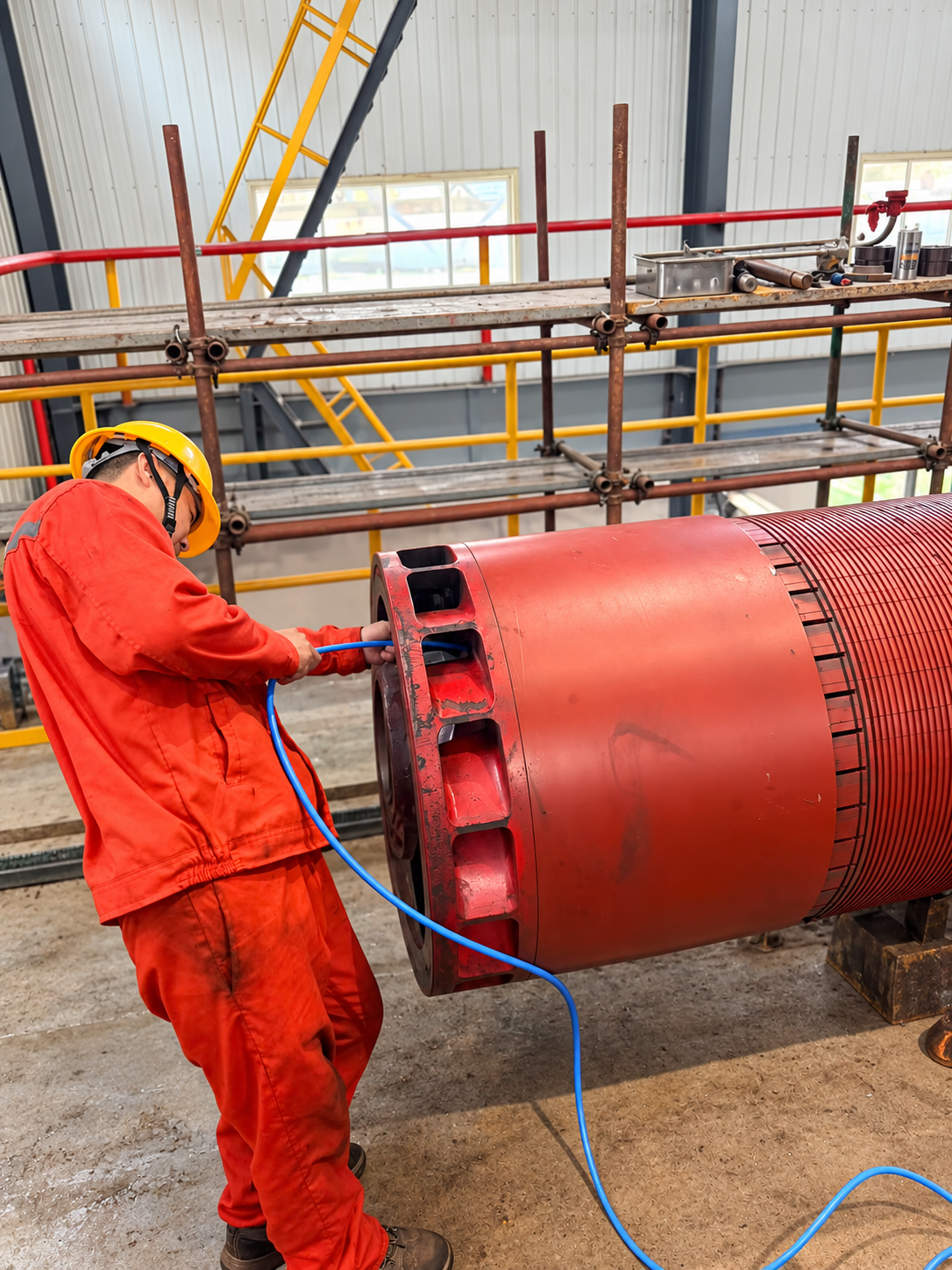
Generator rotor precision cleaning
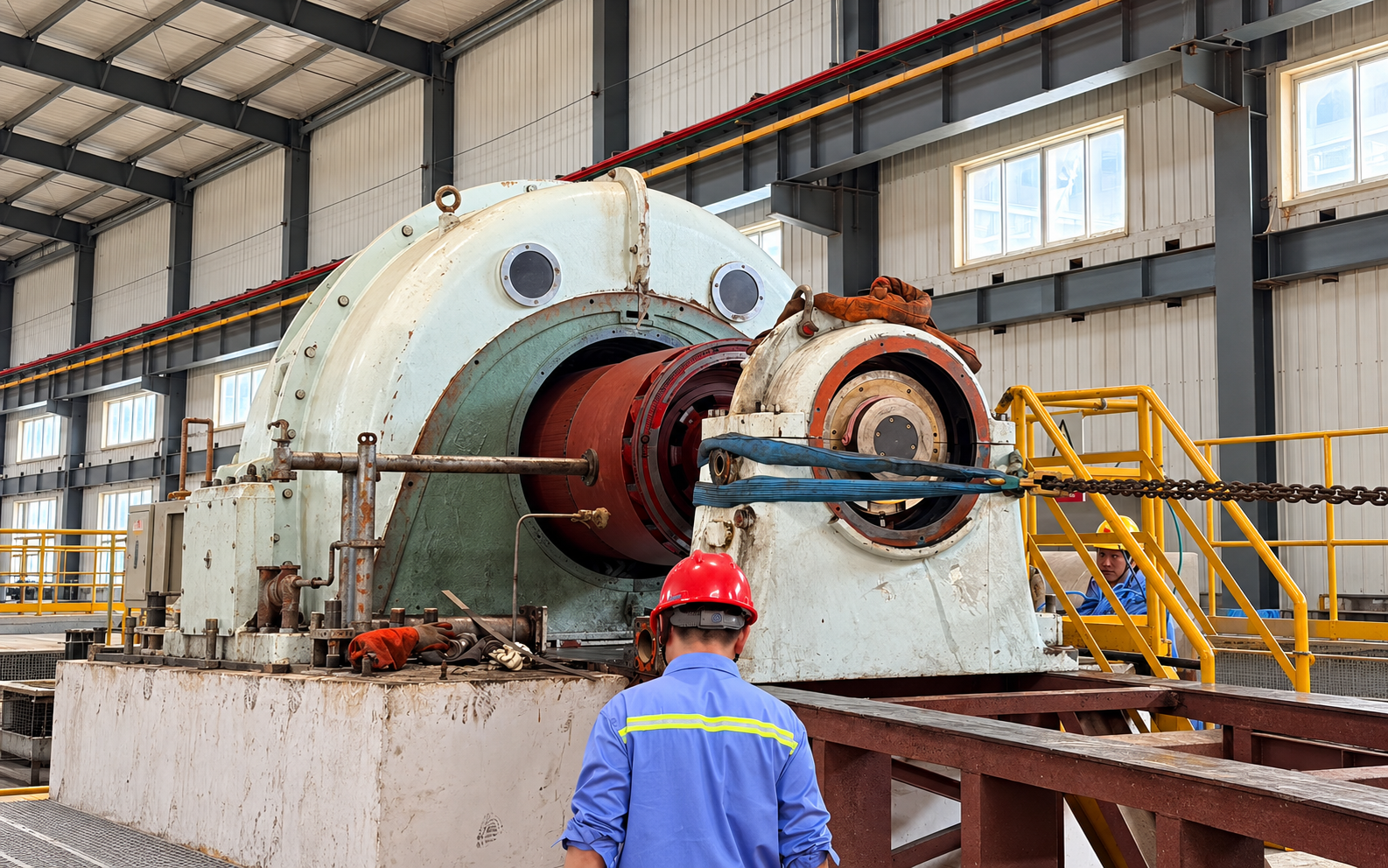
Generator rotor withdrawal with stator protection
Rotor & Stator
- Rotor withdrawal with controlled extraction and protection
- Stator winding and rotor surface dust cleaning
- Winding and wedge looseness inspection; no looseness found
- Rotor insulation resistance test and DC test per actual scope; results acceptable
- Rotor reinsertion with alignment verification
Bearings & Pedestal
- Front bearing cleaned with no debris found before refit
- Rear bearing clearance and crush recheck with lead-wire method; results acceptable
- Rear bearing pedestal insulation resistance check; results acceptable
- Bearing support-pad contact scraping as required
Alignment & Restoration
- Gearbox-generator coupling alignment and recheck
- Turbine-gearbox alignment verification
- End-cover refit with silicone sealant joint sealing
- Generator electrical tests per applicable standards
- Full generator restoration to operational condition
Project Outcome
Successful Grid Synchronization
Successful grid synchronization and excellent post-overhaul performance confirmed by the owner.
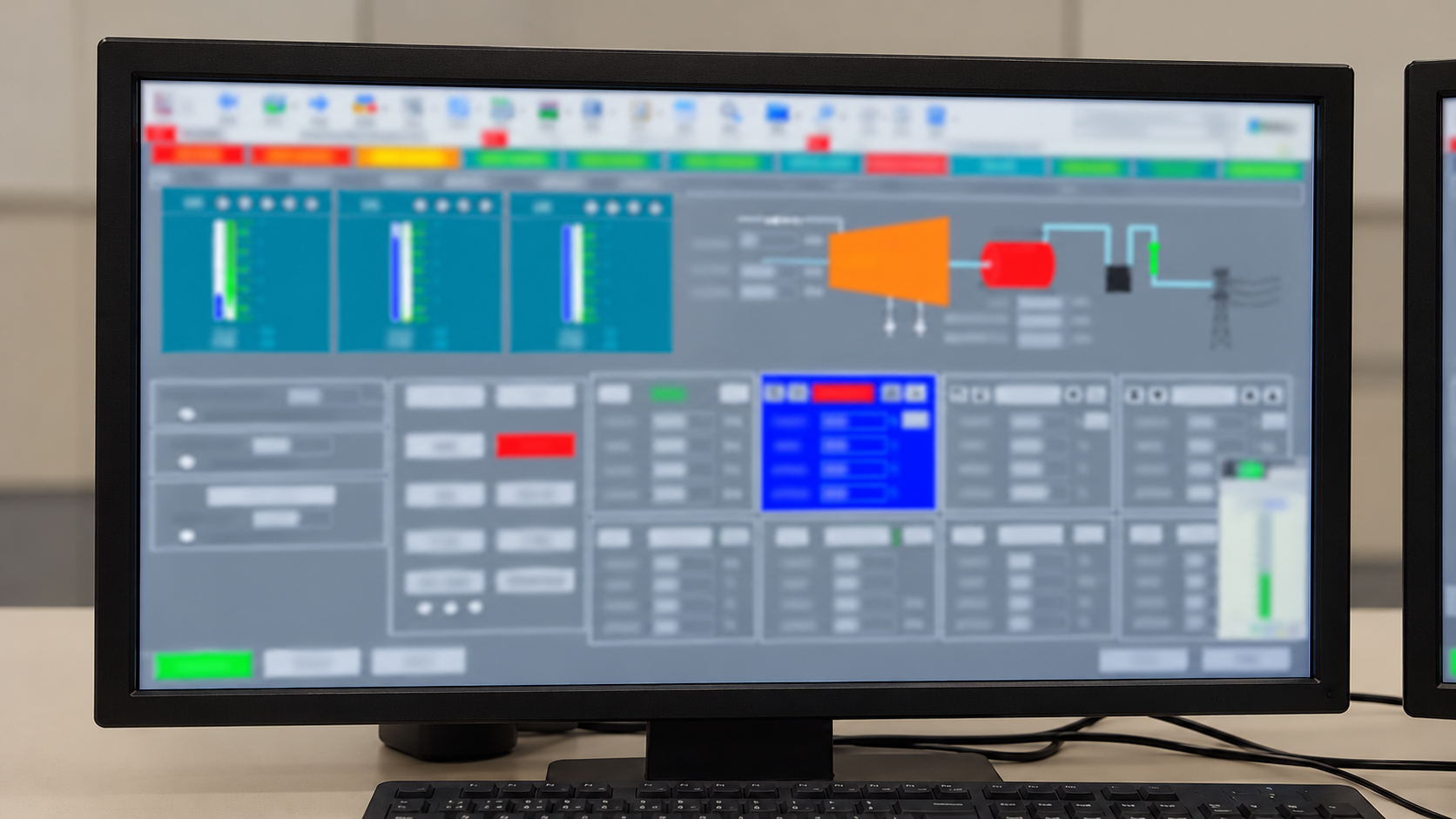
Grid synchronization — anonymized control-room photograph
Documentation
Quality Through Every Phase
Measured records, as-found and restored photos, customer inspection and witness points, welding specialist coordination, defect and spares review, final report and follow-up recommendations.
Discuss Your Overhaul
Ready to plan your next turbine or generator overhaul? Contact our team to discuss scope, timeline, and field execution.
You can also review the tools and consumables prepared for each overhaul stage.